Trump Recalls 30 U.S. Ambassadors— The news quickly ignited a stir in American politics and global diplomacy. This decision, taken under the “America First” policy, is being considered unprecedented. Nearly 30 career ambassadors and senior diplomats have been removed or recalled from their posts, sparking deep concern from Democrats, former diplomats, and many international allies.
Critics say the move could undermine US foreign policy, while supporters say it will help the administration pursue its priorities. The controversy wasn’t limited to the US, but reverberated across Europe, Africa, and Asia.
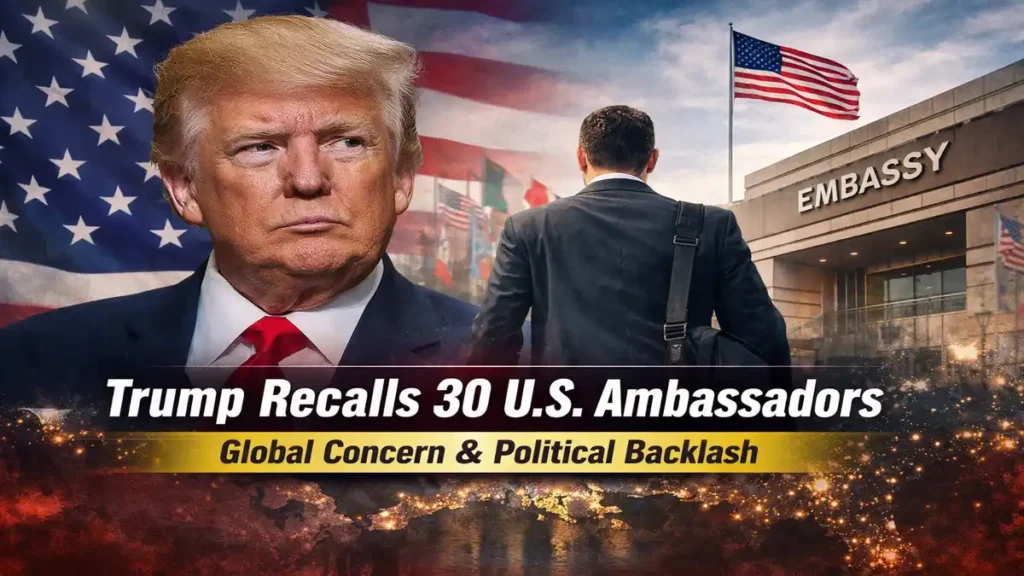
Why did Trump recall 30 US ambassadors?
Trump Recalls 30 U.S. AmbassadorsThe primary reason behind this is believed to be the “America First” policy. This policy aims to ensure that US foreign policy and diplomatic missions are consistent with the president’s ideology and strategy.
According to sources, the Trump administration believes that many career diplomats are tied to the policies of the previous administration, which could hinder the implementation of the new foreign policy. Therefore, a major overhaul was deemed necessary.

Which countries will be affected?
The impact of this decision is not limited to one region. The countries that have recalled US ambassadors include:
- Africa:While the US is already wary of the growing influence of China and Russia
- Asia:especially in strategic partner countries
- Europe:While America’s traditional allies appeared uncomfortable with this decision
- Middle East:where the diplomatic balance is extremely delicate
Diplomatic vacuums in these regions could have long-term implications for US foreign policy.
Political reaction in the US: Democrats protest
Trump Recalls 30 U.S. AmbassadorsThe news drew sharp reactions from Democratic leaders, with several lawmakers calling it a “political purge.”
Democrats say career diplomats are above party lines and their job is to serve the country, not to advance a political agenda. They argue that such a decision undermines the impartiality and stability of the foreign service.
Global response: Concerns from allies
US allies have also expressed concern over the decision. European leaders believe the move could hinder diplomatic dialogue.
Many analysts say that when the world is already grappling with geopolitical tensions,Trump Recalls 30 U.S. AmbassadorsSuch a decision could further increase global instability.
Impact on ‘America First’ policy and foreign relations
The “America First” policy has been controversial in the past. Under this policy, Trump prioritized US interests in trade, defense, and diplomacy.
While supporters see this as a sign of strong leadership, critics say it could isolate the US. The mass withdrawal of ambassadors is seen as another example of this policy.
Impact on career diplomats and the State Department
Trump Recalls 30 U.S. AmbassadorsThe situation has had a direct impact on the State Department, with fears of a decline in morale among career diplomats.
Former ambassadors say such decisions increase uncertainty among young officers and force the foreign service to work under political pressure.
Will this decision affect national security?
Many security experts have warned that diplomatic vacuums could impact intelligence sharing and security cooperation.
Ambassadors are not just ceremonial representatives, but work with local governments on security, trade, and strategic issues. Sudden changes could increase national security risks.
Historical context: Has this happened before?
It is common in American history for some ambassadors to change hands with presidential changes, butRemoval of career diplomats on such a large scale is rare. It is believed.
According to experts, this decision could prove to be a turning point in the history of modern American diplomacy.
What will happen next? Possible outcomes
It will be seen in the coming months whether the Trump administration appoints new, loyal diplomats or relies on temporary arrangements.
If the vacancies persist for a long time, America’s global role could be weakened. Supporters hope the change will lead to more effective foreign policy.
conclusion
Trump Recalls 30 U.S. AmbassadorsThis decision is not just an administrative decision, but a significant step in transforming US foreign policy. While supporters see it as a symbol of strong leadership, critics see it as a threat to diplomatic stability.
Time will tell whether this decision strengthens or weakens America on the global stage. For now, it is certain that it has sparked debate around the world.
FAQs: Trump Recalls 30 U.S. Ambassadors
❓ Why did Trump recall 30 US ambassadors?
According to the Trump administration, this decisionAmerica First policyhas been taken under, so that American foreign policy can be shaped in accordance with the priorities of the President.
❓ Is this decision the first time in American history?
on such a large scaleRemoval of career diplomats rareUsually, a change of government brings limited changes, but this move is extraordinary.
❓ Which countries will be most affected by this decision?
The impact of this decisionEurope, Africa, Asia and the Middle EastThis can be seen in areas where the American diplomatic role is considered important.
❓ Why are Democrats opposing this decision?
Democrats say career diplomatAbove politicsRemoving them would undermine the stability and impartiality of foreign policy.
❓ Could this affect America’s national security?
According to experts, the sudden withdrawal of ambassadorsIntelligence cooperation, security agreements and diplomatic dialogueMay be affected.
❓ What does the ‘America First’ policy mean?
The ‘America First’ policy means that AmericaEconomic, security and diplomatic interestsPut this above all other priorities.
❓ Will new ambassadors be appointed soon?
It’s unclear at this time. According to reports, the administrationLoyal and pro-policycan search for candidates.
❓ What impact will this decision have on global politics?
This move has worsened relations between the US and its allies.Stress may increase, as well as increased uncertainty in global diplomacy.